


Time Shooter 2
1. Game Overview
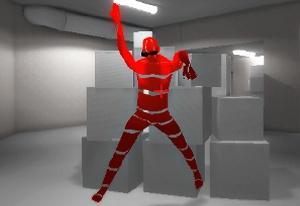
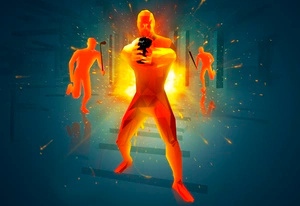
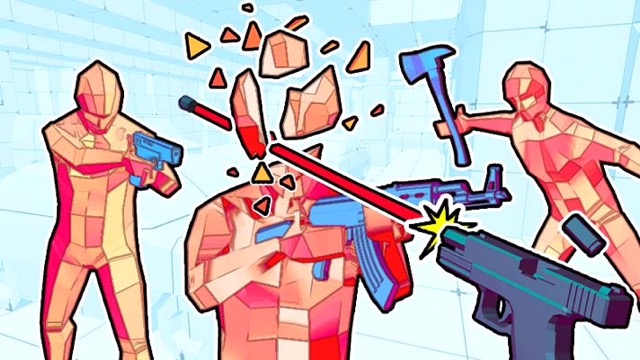
Time Shooter 2 is a first-person shooter where time only moves when you do — a deceptively simple rule that transforms every combat encounter from a reflex test into a deliberate tactical puzzle. Developed by GoGoMan and released in March 2022, it refines the core premise of the original Time Shooter with expanded weapon variety, more complex enemy configurations, and level design that consistently presents new spatial challenges without overcomplicating the mechanic that makes the series work.
The game's SuperHot-inspired time-control system means that stopping mid-combat is not a pause — it's a strategic tool. A bullet suspended in the air tells you exactly where to move to avoid it. A frozen enemy mid-attack gives you time to position, grab a better weapon, and prepare a decisive counter. Rooms that would be overwhelming in a conventional shooter become solvable puzzles because you can stop and think at any point in the middle of the chaos, no matter how many threats are active simultaneously.
What makes Time Shooter 2 particularly compelling is the environmental weapon system. Anything in the game can be a weapon — firearms, throwable objects, improvised tools — and identifying the most effective option for each situation is part of the puzzle each room presents. Players who treat their surroundings as a full tactical resource, rather than scanning exclusively for guns, consistently find more elegant solutions to the scenarios the game constructs.
With an endless level structure, real-time performance stats, and optional ad-supported power-ups that provide temporary advantages, Time Shooter 2 offers both depth for players who want to push their tactical thinking and accessibility for those who want a satisfying combat experience without a long learning curve.
Key Details:
| Genre: | First-Person Shooter / Tactical Action |
| Difficulty Level: | Medium to Hard |
| Average Play Time: | 15–30 minutes per session |
| Best For: | Tactical shooter fans, players who enjoyed SuperHot, anyone wanting strategic FPS gameplay without reflex demands |
2. How to Play
Getting Started:
- Open Time Shooter 2 in your browser — no download required.
- Pause at the start of each new room to survey the full environment before moving.
- Identify all enemies, their positions, and all weapon pickups before committing to your first movement.
- Pick up weapons by left-clicking; throw weapons by right-clicking or pressing R.
- Prioritize long-range threats first — enemies with guns are more dangerous than melee opponents because they can hit you from across the room while you're handling closer threats.
Basic Controls:
| Action | Key / Input |
|---|---|
| Move | WASD or Arrow Keys |
| Shoot / Pick Up Weapon | Left-Click |
| Throw Weapon | Right-Click or R |
Objective: Advance through an endless sequence of rooms by eliminating all enemies in each one. Use the time-control mechanic — time freezes when you stop moving — to plan your approach, dodge incoming fire, and sequence your attacks methodically. Environmental objects supplement the weapon pickups available throughout each room. Progress as far through the level sequence as possible while keeping your tactical thinking ahead of the escalating challenge.
3. Game Features & Highlights
✓ Movement-Controlled Time System — Time advances only when you move and freezes when you stop, giving you unlimited decision time at any moment during combat and transforming the FPS format into a deliberate tactical experience.
✓ Universal Environmental Weapons — Anything in the game can be used as a weapon — firearms, throwable objects, and improvised tools — rewarding players who read the full tactical potential of each room rather than waiting for conventional weapons.
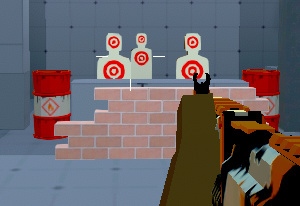
✓ Expanded Weapon Variety — A broader selection of firearms than the original Time Shooter, including AK-47s and other versatile options that change the tactical calculus for rooms with multiple armed enemies.
✓ Endless Level Progression — Rooms continue indefinitely with escalating complexity and enemy configurations, ensuring that the strategic ceiling remains high regardless of how far you advance.
✓ Optional Ad-Supported Power-Ups — Watch a short ad to receive invulnerability or infinite ammo for one level — a useful option for players stuck on a particularly difficult room configuration.
4. Tips & Strategies
Beginner Tips:
- Check your surroundings before every move. The frozen state at the start of each room is your most valuable resource. Use it fully — identify every enemy, every weapon, every piece of cover — before advancing. Players who skip this assessment consistently make avoidable mistakes that stem from moving without knowing what they're moving into.
- Take ranged enemies out first. An enemy with a gun can shoot you from across the room while you're dealing with a closer melee threat. Sequencing your eliminations to remove the most distant armed opponents first, even if reaching them requires more complex movement, almost always produces better outcomes than engaging the closest enemy regardless of what they're carrying.
- Look for the AK-47 when facing multiple armed enemies. The AK-47's combination of rate of fire and manageable handling makes it the most reliable weapon for rooms with several armed opponents spread across a wide area. Identifying and prioritizing it in room layouts where multiple gun-wielding enemies are present is a consistent tactical advantage.
Advanced Strategies:
- Use thrown weapons to advance time safely. Throwing an object across a room moves time forward while the object is in flight — giving you the time advancement needed to get enemies reacting, without physically moving yourself into their effective range. This lets you manipulate the combat timeline from a safe position before closing in.
- Plan your exit path from each engagement. Before committing to a sequence of attacks, identify where you'll be after the final elimination and whether that position leaves you prepared for the next room or exposed to any remaining threats you missed. Planning two moves ahead is more reliable than reacting to what's left after each individual action.
- Use frozen bullet positions to pre-aim. When you stop moving and bullets are suspended in the air, you have unlimited time to aim precisely at enemies before resuming movement. Pre-aiming while stationary, then taking a single step to advance time enough for enemies to enter your crosshair, produces far more accurate shots than trying to aim while in motion.
What to Watch Out For:
- Enemies positioned off-screen at room entry. Not every enemy in a room is visible from your starting position. After your initial assessment, approach room entry points cautiously — particularly doorways and corners — to avoid walking into an enemy positioned just outside your field of view when you entered.
- Dropping weapons unintentionally. Right-clicking or pressing R throws your currently held weapon. In tense moments where the instinct is to fire rapidly, an accidental right-click can disarm you at a critical moment. Develop the habit of deliberate, single-input firing rather than rapid clicking that risks the wrong input registering.
5. Game Elements Explained
Time-Control Mechanic
Time Shooter 2's movement-as-time-control system is the complete foundation of its gameplay identity. The rule is absolute: time moves when you move, and stops when you stop. This applies to every element of the game simultaneously — enemy movement, enemy attacks, projectiles already in flight, and environmental objects. When you stop, the entire game is suspended in a frozen snapshot that you can examine without limit before choosing your next action.
The mechanic creates a form of FPS combat that is fundamentally non-reactive. In conventional shooters, success depends on reacting faster than your opponents. In Time Shooter 2, reaction speed is irrelevant because you can always stop and think before any consequence reaches you. What matters instead is the quality of your assessment and the clarity of your plan — seeing the situation accurately, identifying the optimal sequence, and executing it with the precision that frozen-time planning enables.
This design makes Time Shooter 2 accessible in ways conventional shooters aren't, while maintaining a genuine skill ceiling. The accessible layer is that anyone can stop and think before acting — there's no time pressure that excludes less reactive players. The skill ceiling is that expert play involves reading situations faster, planning more moves ahead, and identifying creative solutions that less experienced players miss even with unlimited thinking time.
Weapon System & Arsenal
Time Shooter 2's weapon system operates on the "anything can be a weapon" principle established in the original game, expanded with a more comprehensive firearm selection. Pickups throughout each room include pistols, shotguns, rifles including the AK-47, and other firearms suited to different ranges and threat configurations. Each weapon handles distinctly — the shotgun delivers close-range stopping power but requires proximity; rifles and the AK-47 provide effective damage at greater distances; pistols bridge close and mid range with manageable accuracy.
The environmental weapon layer supplements conventional pickups with throwable objects that serve dual purposes. Thrown objects travel through time when in motion, creating a controlled time advance that lets you influence the situation without physically relocating. They can deal damage to enemies who are hit directly, stagger enemies to interrupt their attack animation, or serve as distractions that draw enemy attention before you move in from a different angle.
Thrown weapons also have a second life as consumable firepower when thrown at enemies at point-blank range — right-clicking or pressing R to throw a weapon you were considering dropping anyway can deal damage before it hits the ground, converting a decision about inventory management into a tactical opportunity.
Level Structure & Progression
Time Shooter 2 features an endless level structure — rooms continue indefinitely with no fixed endpoint, escalating in enemy count, enemy variety, and spatial complexity as you advance. This structure serves the game's replayability by ensuring that even experienced players encounter rooms that require fresh tactical approaches rather than eventually plateauing at a difficulty they've mastered completely.
The game tracks real-time performance statistics that give players a concrete measure of their progress beyond simple survival. Kill counts, accuracy rates, and other metrics reflect the quality of tactical decision-making across a session, providing feedback that informs skill development more precisely than simple pass/fail level completion would.
The optional ad-supported power-up system — invulnerability or infinite ammo for one level, accessible by watching a short ad — is deliberately positioned as a tool for players stuck on a specific room configuration rather than a fundamental gameplay system. It provides a low-friction way to move past an obstacle that's become frustrating rather than instructive, without affecting the core time-control experience the game is built around.
6. Frequently Asked Questions
Q: How does throwing a weapon work in Time Shooter 2? A: Right-click or press R to throw your currently held weapon. Thrown weapons travel through time while in motion, creating a controlled time advance that can be used tactically — to deal damage from a distance, interrupt an enemy attack, or advance time enough to reveal how an enemy will react before you physically close the distance. Be deliberate with this input, as it disarms you until you pick up another weapon.
Q: What should I do when I enter a room with many enemies and few obvious weapons? A: Stop immediately at the room entrance and survey the full environment. Environmental objects — chairs, bottles, tools — are legitimate weapons even when firearms aren't immediately visible. Identify the most dangerous enemy (typically the one farthest away with a ranged weapon) and plan a path that reaches a throwable object or improvised weapon quickly enough to begin the engagement before that enemy can take multiple shots. The AK-47, if present, should be your priority pickup in heavily armed rooms.
Q: How many levels are in Time Shooter 2? A: Time Shooter 2 is an endless game — levels continue indefinitely with increasing difficulty and no final room. The goal is advancing as far as possible and improving your personal performance statistics across sessions rather than reaching a completion state.
Q: Is Time Shooter 2 playable on mobile? A: Yes. Time Shooter 2 is browser-based and accessible on desktop, mobile, and tablet. The desktop experience with a mouse and keyboard is optimal, particularly for the precision aiming the game rewards, but mobile play via browser is supported on both Android and iOS.
Q: What are the ad-supported power-ups and when should I use them? A: Watching a short ad grants either invulnerability or infinite ammo for one level. These power-ups are most useful when a specific room configuration has repeatedly proved difficult despite genuine tactical effort — they provide a way to progress past a frustrating obstacle rather than a shortcut through the core experience. Using them too frequently removes the tactical challenge that makes Time Shooter 2's progression rewarding.
7. Related Games You Might Enjoy
If you like Time Shooter 2, you might also enjoy:
- Time Shooter 3 - It keeps the same time-control shooter DNA while changing the mission structure and enemy pressure.
- Time Shooter - It keeps the same time-control shooter DNA while changing the mission structure and enemy pressure.
- Time Shooter Hot: Slowdown Confrontation - It keeps the same time-control shooter DNA while changing the mission structure and enemy pressure.