



Time Shooter 3: SWAT
1. Game Overview
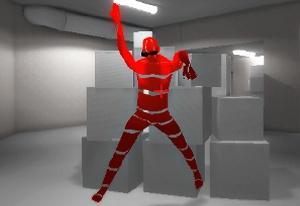
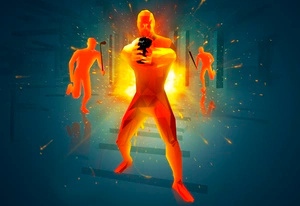
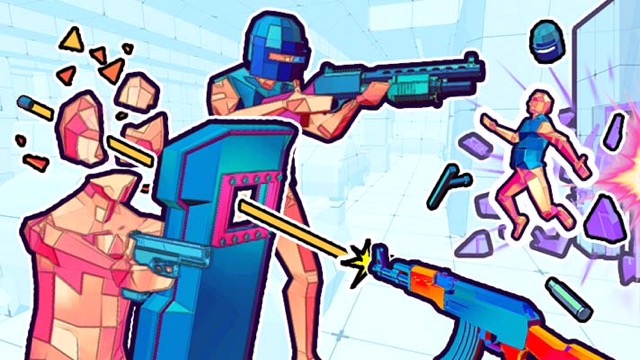
Time Shooter 3: SWAT is the third installment in GoGoMan's time-control FPS series and its most tactically demanding entry. Building directly on the movement-as-time-control mechanic established across Time Shooter and Time Shooter 2 — time moves when you move, freezes when you stop — this sequel introduces two significant additions that reshape how the game is played: a hostage rescue objective that adds lives worth protecting alongside your own, and enemies equipped with full SWAT gear including riot shields, helmets, and body armor that require more deliberate and creative approaches to eliminate.
The result is a game where the core time-control mechanic — already a distinctive and genuinely interesting FPS format — is applied to a more complex set of tactical problems. Enemies that are frontally shielded require you to flank or find angles that bypass their protection. Armored opponents require more precise targeting to hit vulnerable zones. And hostages scattered throughout levels add a spatial constraint to your planning: eliminating threats efficiently while keeping rescue targets alive demands a different kind of tactical sequencing than simply clearing rooms.
Released in March 2022 alongside Time Shooter 2, Time Shooter 3: SWAT has earned a strong player rating on the strength of its Matrix-style slow-motion gunfights, the expanded tactical complexity of its enemy designs, and the sense of deliberate, calculated action that the time-control mechanic consistently produces. New features like the battering ram for breaching doors and riot shields you can pick up and use yourself add further tactical options to an already deep system.
For players who have completed Time Shooter 2 and want a stiffer challenge within the same framework, or those looking for the series' most fully-featured entry, Time Shooter 3: SWAT is the definitive Time Shooter experience.
Key Details:
| Genre: | First-Person Shooter / Tactical Action |
| Difficulty Level: | Medium to Hard |
| Average Play Time: | 20–40 minutes per session |
| Best For: | Tactical FPS fans, Time Shooter series players, anyone who enjoyed SuperHot |
2. How to Play
Getting Started:
- Open Time Shooter 3: SWAT in your browser — no download or account required.
- Survey every room before moving — identify enemy positions, hostage locations, and weapon pickups before committing to your first step.
- Note which enemies carry riot shields and plan flanking angles before engaging them directly.
- Prioritize protecting hostages — their position constrains your tactical options and must factor into your sequencing.
- Use the battering ram or shotgun to breach doors when entry timing matters, and pick up riot shields dropped by eliminated enemies for your own use.
Basic Controls:
| Action | Key / Input |
|---|---|
| Move | WASD or Arrow Keys |
| Shoot / Pick Up Weapon | Left-Click |
| Throw Weapon / Release Shield | Right-Click or R |
| Pick Up / Use Shield | F |
Objective: Eliminate all terrorist enemies in each room while rescuing the hostages they are holding. The dual objective — protect hostages and eliminate threats — requires tactical sequencing that accounts for both your own survival and the safety of rescue targets. Use the time-control mechanic to plan each engagement carefully before acting, ensuring that no hostile actions reach hostages before you can neutralize the source.
3. Game Features & Highlights
✓ Hostage Rescue Objective — A dual mission structure requires you to eliminate all enemies while ensuring hostages survive, adding a spatial constraint to tactical planning that makes every room a more complex puzzle than pure combat scenarios.
✓ SWAT-Geared Enemies — Riot shields, helmets, and body armor on enemy combatants require flanking, creative angle-finding, and more precise targeting than earlier series entries, raising the tactical bar throughout.
✓ Movement-Controlled Time System — Time moves only when you move, freezes when you stop — the series-defining mechanic that makes every combat encounter a deliberate tactical decision rather than a reflex test.
✓ New Equipment & Breaching Tools — The battering ram for door entry and collectable riot shields for personal protection expand the tactical toolkit beyond what earlier series entries provided.
✓ Endless Level Structure — Rooms continue indefinitely with escalating difficulty, ensuring that the strategic challenge grows alongside player proficiency rather than plateauing at a mastered difficulty level.
4. Tips & Strategies
Beginner Tips:
- Locate hostages before planning any engagement. Hostage positions constrain your tactical options — you cannot fire in directions that risk the hostages you're protecting. Identify where they are before your first move so that your planned attack angles account for their presence throughout the sequence.
- Don't approach riot-shielded enemies from the front. Riot shields block frontal attacks entirely. Moving to flank shielded enemies — approaching from their unprotected sides or rear — is the only reliable way to eliminate them. Plan your movement path to arrive at a flanking angle before engaging.
- Use the F key to pick up dropped shields. When a shielded enemy is eliminated, their riot shield can be collected and used for your own protection. In rooms with multiple ranged threats, having a shield significantly extends how long you can survive taking fire from different directions simultaneously.
Advanced Strategies:
- Breach doors to control timing. Using the battering ram or a shotgun to break through a door at the moment of your choosing lets you control when enemies in the next room become aware of your presence. Breaching quickly into a room before enemies can fully prepare is a tactical option that direct entry through open doorways doesn't provide.
- Use hostage positions as information. Enemies near hostages are constrained in their behavior by the rescue mechanics — they're unlikely to be positioned in ways that immediately endanger the hostages they're holding. This constraint is tactical information: enemies clustered near hostages can sometimes be approached from angles that the hostage proximity makes safer than it would otherwise appear.
- Throw shields at shielded enemies. A thrown shield — right-click or R — can stagger an enemy carrying their own shield, creating a brief window to attack from the front before they recover. This technique is particularly valuable in confined rooms where flanking angles are limited by geometry.
What to Watch Out For:
- Losing sight of hostage positions during complex sequences. In rooms with many enemies and multiple movement phases, the attention demanded by active threats can cause hostage positions to slip from immediate awareness. Before each major movement, confirm that your planned path and attack directions don't inadvertently endanger rescue targets.
- Exposing flanks while engaging shielded enemies. Moving to flank a shielded opponent exposes your side and rear to other enemies in the room. Clear ranged threats before attempting to flank shielded enemies whenever possible, or plan flanking routes that use cover to protect against the threats you're not actively engaging.
5. Game Elements Explained
SWAT Enemy Designs & Tactical Challenges
The terrorist enemies in Time Shooter 3: SWAT are the most tactically demanding opponents in the series, distinguished by the gear they carry and the different response each piece of equipment requires. Riot shield carriers are the game's primary tactical puzzle — their shields completely negate frontal attacks, requiring you to plan movement paths that arrive at their unprotected sides or rear before engaging. In rooms with multiple shielded enemies, sequencing your flanks to avoid exposing yourself to one while dealing with another is a multi-step planning challenge that the time-control mechanic gives you unlimited time to solve.
Helmeted enemies reduce effective damage zones, making headshots less reliable and requiring more shots to eliminate. Body-armored opponents similarly require more hits or specifically placed shots to take down efficiently. The combination of these protective elements on different enemy types within the same room means that your weapon selection and targeting approach need to adapt between individual opponents within a single engagement rather than treating all enemies as equivalent targets.
The enemy gear system rewards players who identify threat priority correctly — an unarmored enemy with a gun is often more immediately dangerous than a shielded melee opponent who requires more creative elimination — and who plan weapon selection based on the specific armor configurations present in each room rather than defaulting to the most powerful available weapon regardless of context.
Hostage Rescue Mechanics
The hostage rescue objective fundamentally changes the tactical structure of Time Shooter 3: SWAT compared to earlier series entries. In pure combat scenarios, any angle of attack that eliminates the enemy without harming yourself is valid. With hostages present, attack angles are constrained by the hostages' positions — firing directions that risk rescue targets are off-limits regardless of how tactically convenient they might otherwise be.
This constraint adds a spatial dimension to room planning that pure combat doesn't require. Before moving, you must not only plan how to eliminate each enemy, but ensure that your planned attack angles don't create crossfire through hostage positions. In rooms with hostages distributed throughout the enemy configuration, this requires mapping the entire room's geometry before committing to any movement.
The hostage mechanic also changes threat priority in a specific way: enemies that are positioned to immediately harm hostages on their next action — when time resumes — must be addressed before any other consideration. Identifying which enemies pose direct hostage risk versus which pose only personal risk to you, and sequencing your eliminations to address the highest-priority threat to rescue targets first, is the key tactical skill the hostage system develops.
New Equipment: Battering Ram & Riot Shields
Time Shooter 3: SWAT introduces two pieces of equipment that expand the tactical toolkit beyond what the series' earlier entries provided. The battering ram enables controlled breaching of closed doors, allowing you to choose exactly when a new room's encounter begins rather than committing to a predetermined entry timing. Breaching at the right moment — when your position and weapon selection are optimized for the entry — is a tactical advantage that rewards spatial planning over reactive entry.
Riot shields can be collected from eliminated enemy carriers using the F key and carried for personal protection. A held shield blocks incoming fire from the direction you're facing, dramatically changing the survival calculus in rooms with multiple simultaneous ranged threats. The shield can also be thrown using right-click or R, creating a tactical weapon option that can stagger shielded enemies or deal damage to unshielded opponents from a safe distance.
The combination of these tools with the series' existing environmental weapon system gives Time Shooter 3: SWAT the richest tactical toolkit in the series. Rooms that would have a single optimal solution in earlier entries often have multiple viable approaches in SWAT, rewarding players who develop creative tactical thinking rather than learning a single correct answer to each room configuration.
6. Frequently Asked Questions
Q: How do I eliminate enemies with riot shields? A: Riot shields block frontal attacks completely. Move to flank the shielded enemy — approaching from their unprotected side or rear — before engaging. Alternatively, throw a weapon (right-click or R) at a shielded enemy to stagger them briefly, creating a window to attack from the front. The F key lets you pick up dropped shields from eliminated enemies for your own use.
Q: What happens if a hostage is killed? A: Hostage deaths represent a mission failure condition. Preventing hostage casualties requires planning attack angles that don't create crossfire through hostage positions and prioritizing the elimination of any enemy that poses an immediate threat to rescue targets before dealing with other opponents.
Q: How does the battering ram work? A: The battering ram is used to breach closed doors, allowing you to control the timing of your entry into a new room rather than committing to whatever timing a standard door interaction would impose. Position yourself, equip the battering ram, and use it when your weapon selection and position are optimized for the room you're entering. A shotgun can serve as an alternative breaching tool in the same way.
Q: Is Time Shooter 3: SWAT playable on mobile? A: Yes. The game is browser-based and accessible on desktop, mobile, and tablet without any download required. The desktop experience with a mouse and keyboard is optimal for the precision the game rewards, but mobile browser play is supported on both Android and iOS devices.
Q: How many levels are in Time Shooter 3: SWAT? A: Time Shooter 3: SWAT is an endless game with no final room. Levels continue indefinitely with escalating complexity and difficulty, including increasingly challenging enemy configurations and hostage arrangements. The goal is advancing as far as possible and refining your tactical approach across sessions rather than reaching a completion state.
7. Related Games You Might Enjoy
If you like Time Shooter 3, you might also enjoy:
- Time Shooter 2 - It keeps the same time-control shooter DNA while changing the mission structure and enemy pressure.
- Time Shooter - It keeps the same time-control shooter DNA while changing the mission structure and enemy pressure.
- Time Shooter Hot: Slowdown Confrontation - It keeps the same time-control shooter DNA while changing the mission structure and enemy pressure.